



This may surprise many of you but in my 20’s, I was the Executive Chef of a banquet center for 2 years who frequently prepared breakfast for 1000+ people. So suffice it to say, I know quite a bit about cooking bacon. Trust me when I say making your bacon in the oven on a sheet pan is the way to go. It cooks evenly, stays beautifully flat, and gives you perfectly crisp strips every single time. In this guide, I’ll show you my foolproof chef method for cooking bacon in the oven, including the best temperature, how long to cook it, and the simple tricks that make the difference between good bacon and truly perfect bacon.
Why is Bacon in the Oven Better Than Bacon on the Stove?
Bacon cooked in the oven tastes better than bacon on the stove because it relies on a combination of both roasting and frying! Bacon cooked on the stove is cooked by frying in its own fat.
How to Cook Bacon in the Oven (A Step by Step Guide):
- Preheat oven to 375°(F) and line a half sheet pan (18×13) with parchment paper.
- Lay each piece of bacon horizontally in pan. It’s okay if they overlap slightly, but don’t overcrowd the pan.
- Place pan in the oven and set a timer for 40 minutes.
- After 10 minutes, remove pan, and using tongs to hold bacon, carefully drain fat into a bowl or other safe receptacle.
- Flip bacon, rearrange in one layer, and return back to oven.
- Perform the drain and flip twice more, at ten minute intervals. When 40 minutes is up, you should have perfect bacon. (though time will vary slightly depending on thickness of bacon).
- Remove bacon from pan and drain on paper towels.
FAQ for How to Get Crispy Oven Bacon Every Time
Do I start the bacon in a cold oven or a hot oven?
The secret to sheet pan bacon is NOT starting it in a cold oven. This is a food blogger myth that circulates periodically and comes from an old Alton Brown recipe where he places bacon on a wired rack that sits inside a sheet pan and starts cooking it in a cold oven instead of preheating it. The rationale is that when rendering fat from protein, it’s best to do it over low heat so that the protein doesn’t overcook before releasing all its fat. This is only true when cooking bacon and other fatty meats on the stovetop. But the ambient heat from the oven doesn’t pose such a risk. You could start the bacon in cold oven but it will take about 10-15 minutes longer to cook! I’ve placed my sheet pan bacon in both a cold and preheated oven and the end result is almost identical. The only difference is that it takes longer when placed in a cold oven. The REAL secret to awesome bacon is draining the fat (which is why Alton uses the wire rack) and flipping the bacon at least twice during the cooking process (3x for extra crispy bacon).
What Temperature Is Best for Cooking Bacon in the Oven?
After much consideration, I’ve decided that 375°F is the winner. Also, make sure the oven rack is adjusted to the middle position.
How Long Should I Cook Bacon in the Oven?
40-45 for thick cut bacon and 30-35 for thinner types of bacon.
Do I Need a Rack or Any Special Equipment to Cook Bacon in the Oven?
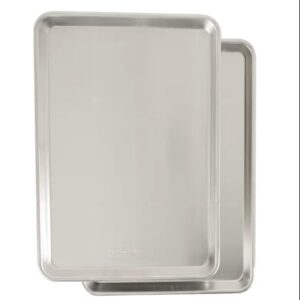
Nope! Not if you us my “drain and flip” method! All you need is a sheet pan and parchment paper. The sheet pan I recommend you use is called a half sheet pan (because they are half the standard size used in restaurants). A half sheet pan fits standard home ovens perfectly. Also necessary is pre-cut parchment paper to fit snugly inside sheet pan.
What is the “drain and flip” method?
After the bacon has been in the oven for 10 minutes, you will remove the pan and carefully drain the bacon fat into a bowl or other heat-safe receptacle while using tongs to hold the bacon in place. Then you will flip the bacon, using a heat-safe spatula, rearrange it into a single layer and return the pan to the oven. That is the “drain and flip” and you will do that 2 more times during the duration of the cook time.
How Do I Know When Bacon Is Perfectly Done?
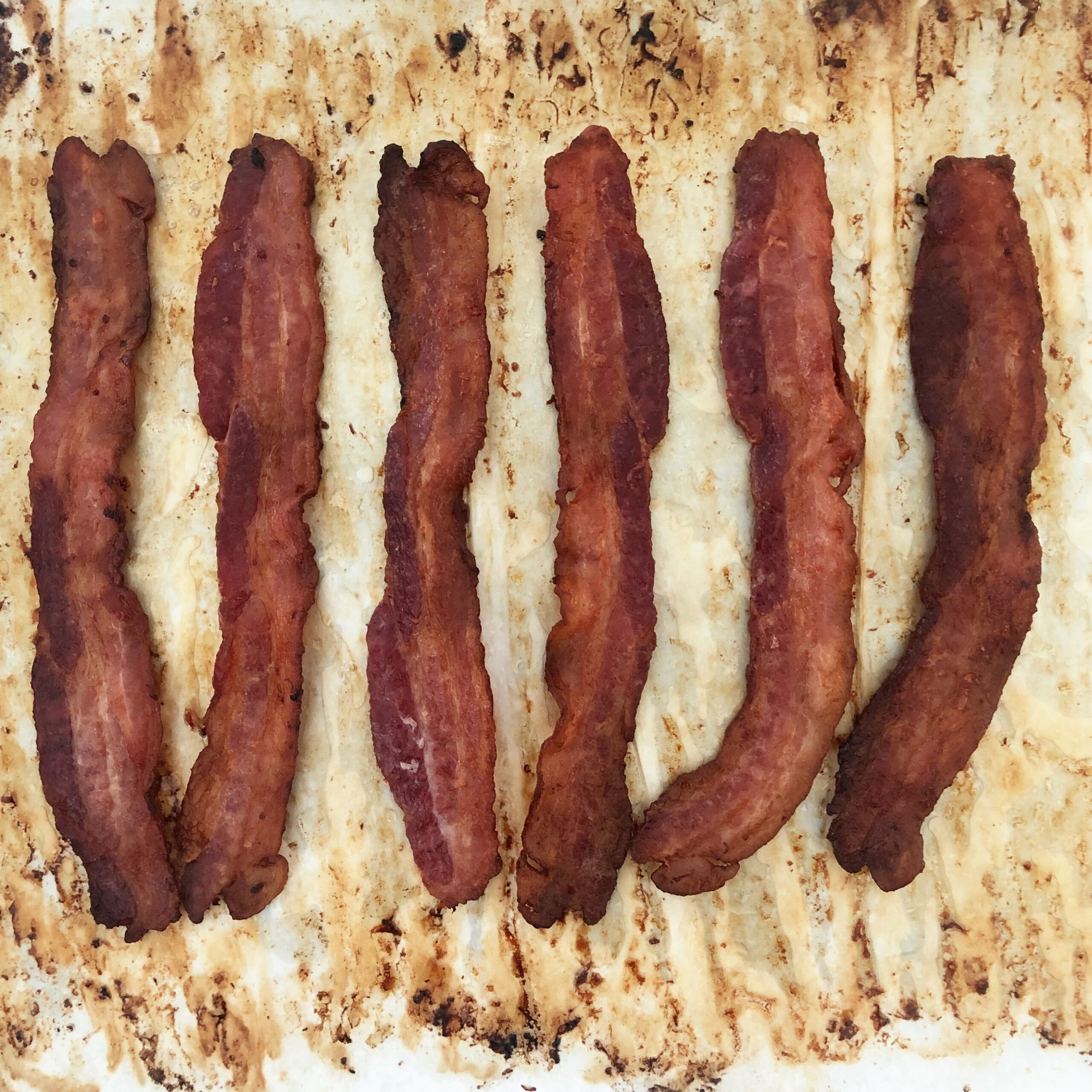
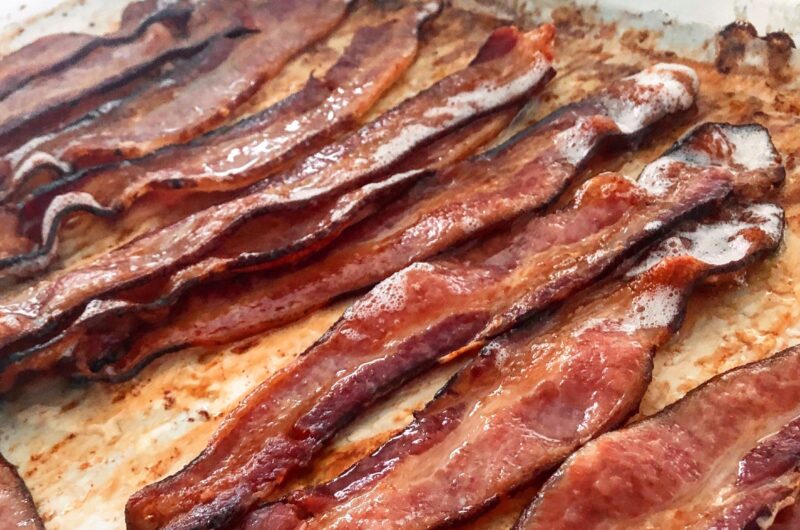
For me, perfect bacon is right where chewy is turning toward crispy. It should stand upright when held between two fingers, bend slightly when you tear it, then break cleanly.
How Do I Store and Reheat Cooked Bacon?
Refrigerate leftover bacon for up to a week and freeze, tightly wrapped for up to 3 months. You could reheat the bacon in a 300°F oven, using a mini sheet pan covered with foil, but I typically just chop up any leftovers and toss into an omelet or a salad like this Turkey and Avocado Club Salad or these Everything But the Wedge Chicken and Green Bean Salad Jars! Or use the leftovers to make these epic Bacon Egg and Cheese Smashed Potatoes, or perhaps this gorgeous Spaghetti with Bacon Onions and Tomatoes!
How to Cook Perfect Bacon
6
servingsIf you’re still cooking bacon in a skillet, you’re making life harder than it needs to be. Use this recipe to learn my foolproof chef method for cooking bacon in the oven, including the simple tricks that make the difference between good bacon and truly perfect bacon.
Ingredients
1 lb bacon, thick cut (about 12 pieces)
Directions
- Preheat oven to 375°(F) and line a half sheet pan (18×13) with parchment paper. Adjust oven rack to the middle position. Lay each piece of bacon horizontally in pan. It’s okay if they overlap slightly, but don’t overcrowd the pan. I find 12 pieces to be the ideal amount. If you have pieces left over, freeze them or save them for something else. Once oven is at 375° (or close), put pan in the oven and set a timer for 40 minutes (30-35 for standard cut bacon). After 10 minutes, remove pan, and using tongs to hold bacon, quickly and carefully drain fat into a bowl or other safe receptacle. Flip the bacon, rearrange in one layer, and return back to oven. Perform the drain and flip twice more, at ten minute intervals. When the time is up, you should have perfect bacon. (Time will vary slightly depending on thickness of bacon and you may need 5 or so more minutes). Remove bacon from pan and drain on paper towels.

Did you make this recipe?
Tag @thesaladwhisperer on Instagram and hashtag it with

Sarah Faris: The salad Whisperer
Sarah is a classically trained chef and Mom whose passion is spreading the gospel of salad. A native New Yorker, she now calls Miami, FL home.
Read more
Share this post:
Leave a Reply