

What Is In Seasoned Salt, Actually?
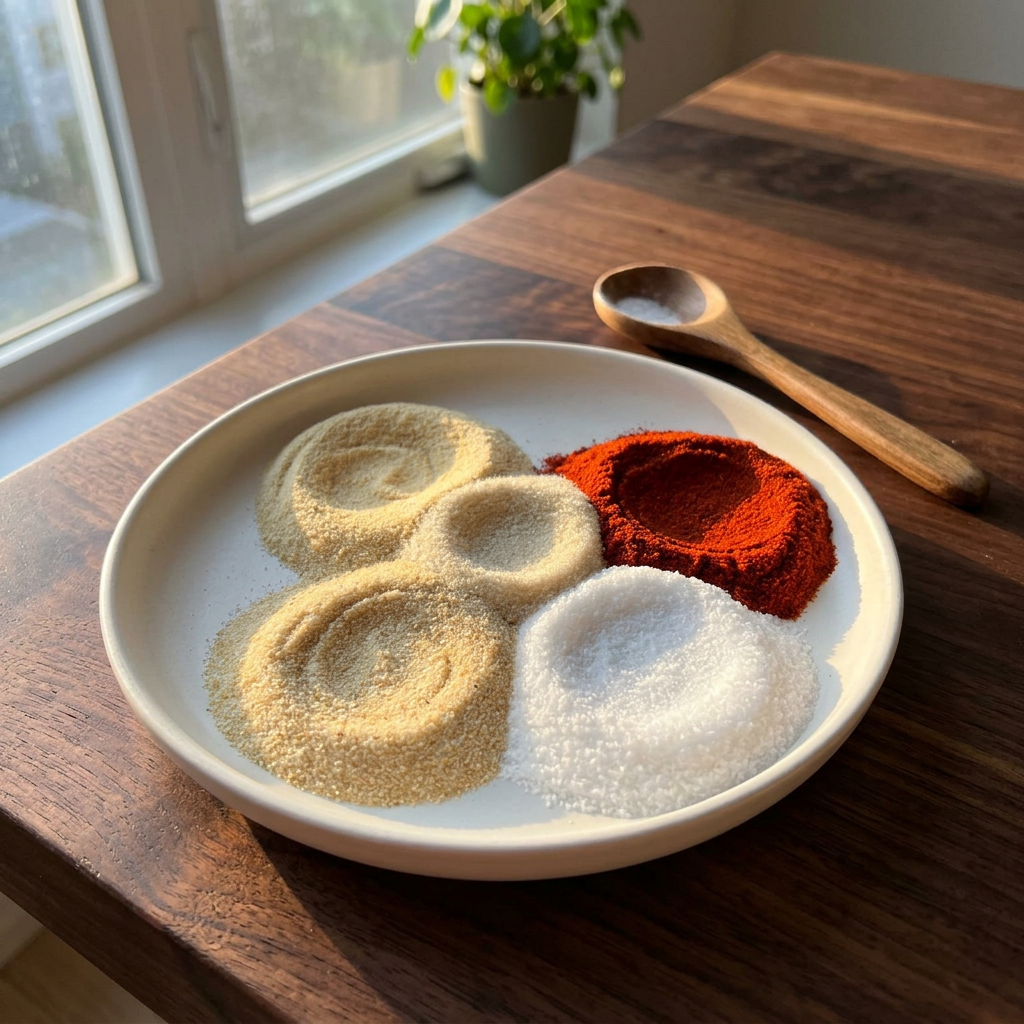
Salt and spices make up the bulk of the blend. The foundation is simple: kosher salt, garlic powder, onion powder, paprika, black pepper, a small amount of sugar and a teensy bit of turmeric. Two details set this version apart from the recipes that all seem to copy each other.
First: regular paprika, not smoked. Smoked paprika has a strong personality. It is wonderful in the right applications, but it will dominate this blend and narrow what you can use it on. Regular paprika gives you color and mild sweetness that keeps the seasoned salt versatile.
Second: a small amount of turmeric. Not enough to taste it, just enough to add a certain je ne sais quoi, a warmth and complexity that people will notice without being able to name. It also gives the blend a beautiful golden color.
There is also a small amount of sugar, which is where most home cooks have a moment of panic. But really, it’s such a tiny amount and almost all commercial varieties contain it. Commercial food labeling laws only require brands to include sugar in their nutritional facts if it is above .5 grams. In this homemade version, the amount of sugar is way less than that! The amount of sugar consumed is so small. One serving has less sugar than you’ll ingest eating two of your kid’s French fries dipped in ketchup!
Why Make This Easy Seasoned Salt Recipe?
If you have ever turned over a canister of store-bought seasoned salt and squinted at the ingredient list, you already know the problem. Filler ingredients. Stabilizers. Things that belong in a manufacturing facility, not in your kitchen. And the price tag for the privilege of consuming them. Making your own seasoned salt takes about five minutes and costs a fraction of what you would pay for the commercial version. More importantly, you control exactly what goes into it.
Can I Leave Out the Sugar?
I beg you not to. Salt and spices make up the bulk of the blend. It’s such a tiny amount per serving and almost all commercial varieties contain it. That tiny bit of sugar really tames the bitterness of brassicas like Brussels sprouts and broccoli and makes them downright craveable. Commercial food labeling laws only require brands to include sugar in their nutritional facts if it is above .5 grams. In this homemade version, the amount of sugar is way less than that! One serving has .08 grams of sugar, less than 1/10 of a gram!
Can I make the Homemade Season Salt in bulk?
One important note on batch size: you can double, but I wouldn’t triple this recipe. Commercial producers use anti-caking agents like rice flour to keep large batches from clumping over time. A massive batch is more likely to clump as it sits. Make what you will use. Keep it in an airtight container away from heat and steam.
What to Use It On:
I use it almost every time I roasted vegetables. Tossed on asparagus, cauliflower, broccoli, or tomatoes before they go into the oven, it does the work of several separate seasonings in a single step. The blend was built for this. The balance of salt, savory spice, and subtle sweetness is exactly what roasted vegetables need. It is also essential to my croutons and cheesy crumbs.
I Use My Homemade Seasoned Salt in All These Recipes:
- My Perfect Roasted Asparagus
- The Roasted Tomatoes I Make Every Late Summer
- My Famous Roasted Cauliflower- I make it 3x/week!
- The Best Cheesy Crumb Recipe on the Web
- My Unmatched Herb and Parmesan Croutons
HOMEMADE SEASONED SALT
UPDATED: 6/23/26 I recently started adding a smidge of ground turmeric and it adds a lovely bit of dimension to the blend. Highly recommend!
Ingredients
3 tablespoons (25.5 g) of Kosher salt
2 tablespoons (14.5 g) of granulated garlic
2 tablespoons (14 g) of paprika (yes, you can use smoked paprika, but I prefer it with plain)
2 tablespoons (19 g) of granulated onion powder
1 tbsp (13 g) of sugar
1 tsp (2g) ground turmeric
Directions
- Combine Kosher salt, granulated garlic, paprika, granulated onion powder, sugar and turmeric then transfer to an airtight jar. Store in a cool, dry place, and it’ll stay fresh and flavorful for up to six months. Some clumping may occur because the blend does not contain any commercial additives.
Did you make this recipe?
Tag @thesaladwhisperer on Instagram and hashtag it with

Sarah Faris: The salad Whisperer
Sarah is a classically trained chef and Mom whose passion is spreading the gospel of salad. A native New Yorker, she now calls Miami, FL home.
Read more
Share this post:
Leave a Reply