

Why Balsamic Vinaigrette Is My Forever Favorite (But Please Don’t Tell the Others)
(P.S. here is a shortcut to 40+ of my Other Restaurant Quality Salad Dressing Recipes)
If you’ve ever wondered how to make balsamic vinaigrette that tastes exactly like the kind you’d get at a great restaurant, you’re in the right place. I’ve developed hundreds of salad recipes over the years, but if I could only keep one dressing in my refrigerator forever, it would probably be this Balsamic Vinaigrette. Its magic is its simplicity and versatility. All you need is a humble bottle of supermarket balsamic vinegar, good olive oil, Dijon mustard, a little honey, salt, pepper, and five minutes.
The Biggest Mistake People Make When Making Balsamic Vinaigrette
Here’s the funny thing: most balsamic vinaigrette recipes get one very important thing wrong. They tell you to buy the most expensive balsamic vinegar you can find.
Please don’t. After spending over a decade making salad dressings professionally, I can tell you that the best balsamic vinaigrette starts with an inexpensive bottle of balsamic vinegar from your local supermarket, not an aged bottle that’s been sitting behind glass under lock and key.
Here’s why. Most aged balsamic vinegars contain around 6 to 8 grams of sugar per tablespoon. That concentrated natural sugar creates an extremely thick, syrupy dressing that’s actually too viscous to properly coat most salads. Instead, I reach for an everyday supermarket bottle that costs around $3 to $5. Those typically contain closer to 3 grams of sugar per tablespoon, creating a vinaigrette that’s lighter, brighter, and much better suited for tossing with vegetables.
Why You Can Trust My Advice
Back in 2007, I spent six months working as a sous chef at the MGM Grand Casino in Detroit. For ten hours a day, I worked in a refrigerated room making salad dressing. That experience completely changed how I think about salads. Before then, I thought dressing existed to make vegetables taste better. But after making hundreds upon hundreds of batches of vinaigrettes, I realized that’s not its job at all. A great dressing doesn’t mask vegetables. It amplifies them. That’s exactly what this balsamic vinaigrette does. It’s simple, balanced, incredibly versatile, and proof that you don’t need a long ingredient list to make something extraordinary.
What Great Balsamic Vinaigrette Should Taste Like
If you think you don’t like balsamic vinaigrette, I’m guessing you’ve been traumatized by bottled balsamic vinaigrette. Most shelf-stable dressings are loaded with gums, stabilizers, preservatives, and fillers that create a thick, almost gummy texture that has very little in common with a freshly made vinaigrette.
A great homemade balsamic vinaigrette should taste balanced. You should notice:
- Tanginess without harshness
- Sweetness without tasting sugary
- Rich olive oil that doesn’t overwhelm
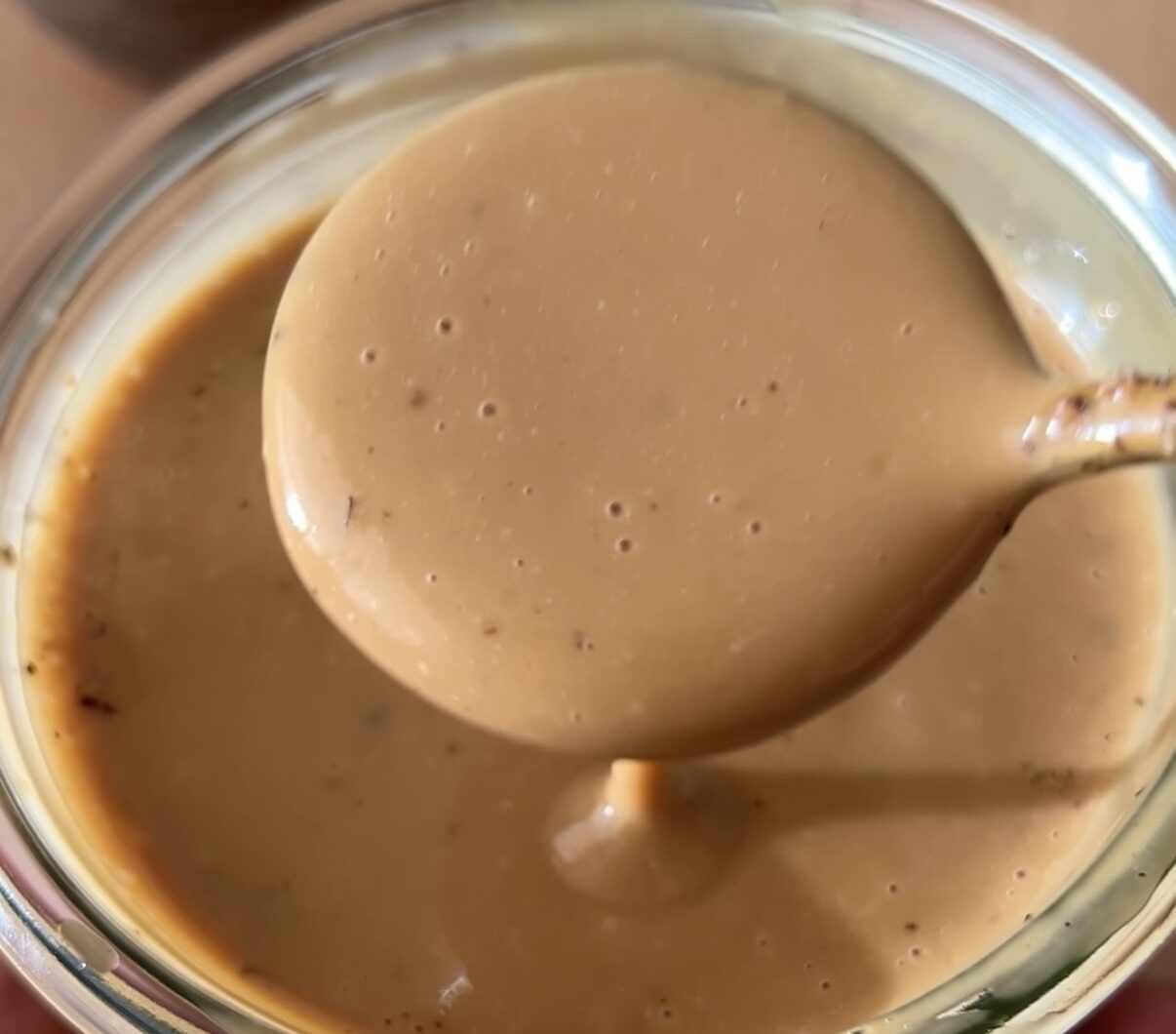
- A silky texture that lightly coats every ingredient
My Technique for Perfect Emulsification
Making balsamic vinaigrette isn’t difficult, but the technique matters as much as the ingredients. Whether you’re using a whisk or an immersion blender, I always recommend the same process.
First, thoroughly combine the balsamic vinegar, Dijon mustard, and honey. Only after those ingredients are fully incorporated should you begin slowly drizzling in the olive oil. Adding the oil gradually creates a stable emulsion that gives the dressing its silky, cohesive texture instead of separating moments after you make it. Finish by seasoning with kosher salt and freshly ground black pepper until everything tastes balanced.
Two Ways to Make This Balsamic Vinaigrette
One of my favorite things about this recipe is that you can take it in two completely different directions.
Classic Balsamic Vinaigrette (Use a Whisk and a Bowl)
If I’m serving delicate greens or want a lighter dressing, I simply whisk everything together in a bowl. The result is a thinner, classic French-style vinaigrette that beautifully coats vegetables without weighing them down.
Creamy Restaurant-Style Balsamic Vinaigrette (Use an Immersion Blender)
If I want something richer, for a loaded grain or bean salad, I add one clove of garlic and blend everything with an immersion blender. The garlic and blending create a thicker, creamier emulsion with that luxurious restaurant-style texture people love.
Both versions are fantastic. It simply depends on the salad you’re making.
WHAT IS THE BEST IMMERSION BLENDER FOR SALAD DRESSING?
The best immersion blender for salad dressing is one you can easily control with one hand so you can drizzle in the oil with the other. It isn’t necessarily the most expensive or powerful one with 20 attachments.
The one I currently have (and ADORE) is the Braun MultiQuick 5, but it is an older model and is becoming increasingly difficult to find. Its replacement, the Braun MultiQuick 5 Vario would be my next pick because it has the same bell shaped bottom that is ideal for salad dressing, but has 21 speeds controlled by a single button. A classic 2-speed model like the Vitamix 2-Speed Immersion Blender would work great too as it has the bell shaped bottom. The Cuisinart Smart Stick or KitchenAid Variable Speed Control Hand Blender, would also work, but the blender housing is not bell shaped, so they would not be my first picks.
Why Can’t I Just Shake Up My Balsamic Vinaigrette?
When you shake a vinaigrette in a jar, it doesn’t break the olive oil into tiny enough droplets for the emulsifier to work properly. Without those small droplets, the dressing won’t achieve that thick, silky, cohesive texture you get at restaurants. It will separate quickly and feel less luxurious on your salad. But you can quickly make this easy restaurant quality vinaigrette salad dressing at home using a whisk for a small batch or a blender (an immersion blender is my preference, but a top loading blender also works) for a large batch.
Can I Use a Milk Frother to Make Dressing?
I would not recommend using a milk frother to make a vinaigrette. Using a milk frother to make salad dressing is like using scissors to cut your lawn. Is it technically possible? Sure, but it’s inefficient. A milk frother will agitate the dressing in the same way shaking dressing in a jar will. But an immersion blender shears oil the into tiny droplets, which increases the surface area of the oil. The increased surface area makes for a stronger emulsion because the emulsifiers are more effectively distributed throughout the oil which keeps the oil and vinegar in suspension longer.
Can I Blend Extra Virgin Olive Oil? I Read Somewhere That I Could Not
Extra virgin olive oil can absolutely be blended, but an immersion blender is the safest choice because it keeps the oil cool. High-speed, top-loading blender motors generate heat which can heat up the oil in the blender carafe. That heat, combined with the aggressive shear of the motor blade that may release the olive oil’s phenolic compounds, creating a bitter flavor. The immersion blender’s motor stays in the hand, above the oil, preventing that heat buildup while the blades shear the oil, still creating a beautiful emulsion. If you’re using a high-powered blender like a Vitamix, consider a 50/50 blend of extra virgin olive oil and a neutral oil like grapeseed or avocado to prevent bitterness.
Is There a Particular Type of Extra Virgin Olive Oil I Should Use?
Most of the extra virgin olive oils for sale on the grocery store shelves will work great for a vinaigrette. Avoid any that say “unfiltered” as they may contain more of the phenols mentioned above. And same goes for any you buy at a farmer’s market or off the side of the road, (not that it’s common here in the US, as it is abroad)!
What Ingredients Do I Need for Balsamic Vinaigrette Salad Dressing?
- balsamic vinegar (a basic supermarket variety is preferable to an expensive aged balsamic)
- extra virgin olive oil,
- and the magic emulsifier combo of dijon and honey will make a salad dressing that clings to each vegetable and enhances the flavor of the salad without overpowering it.
How Long Does It Take to Make a Homemade Balsamic Vinaigrette?
Under 5 minutes. For a small batch vinaigrette, whisk together the acid, honey and mustard first. Then drizzle in the olive oil while whisking vigorously. For a large batch vinaigrette, blend together the acid, honey and mustard first then drizzle in oil while blending. Taste and adjust for seasoning.
What Ingredients Do I Need for a Homemade Vinaigrette Salad Dressing?
An acid, an oil and the magic emulsifier combo of dijon and honey will make a salad dressing that clings to each vegetable and enhances the flavor of the salad without overpowering it. Most people don’t realize that 4 ingredients and proper technique will crush a 20 ingredient “instagram salad dressing” every time. Ans there are 2 ways to do it. If I’m making a small batch, like 3/4 cup I’ll use a whisk and bowl. For a large batch I’ll use my immersion blender.
Do I Need Any Special Tools to Make a Homemade Balsamic Vinaigrette?
The SMALL BATCH version uses an 8-inch whisk and the LARGE BATCH version uses a blender (as stated, I prefer an immersionblender, but a top loading blender works too if you are using an oil blend)
Why Should I Add the Garlic at the End When Making a Whisked Vinaigrette and at the Beginning if Making a Blended Vinaigrette?
The garlic gets added to SMALL BATCH (whisk method) at the end, but added to the LARGE BATCH (immersion blender method) at the beginning. This is because garlic is a potent emulsifier, but only when puréed. As such, in the SMALL BATCH dressing, we are using it as a flavoring agent, not really as a way to bind the vinegar and acid. However, because a blender does a great job of puréeing the garlic, and we take advantage of that in the LARGE BATCH dressing.
Of Note: The Oil-to-Vinegar Ratio I Actually Use Is 2:1 NOT 3:1
You’ll often hear that the “correct” vinaigrette ratio is three parts oil to one part vinegar. I disagree. For nearly all of my dressings, I prefer a 2:1 ratio.
Why? Because the classic 3:1 ratio comes from traditional French culinary standards established in the 19th century. At the time, vinegars were often homemade and significantly more acidic than the vinegars most of us buy today. Modern balsamic vinegar is naturally sweeter and less aggressive. Also, back then, salads were often made with stronger, more bitter greens, typically locally foraged. The extra oil helped mellow those bitter flavors and make the salad taste balanced.
A 2:1 ratio creates a dressing that’s brighter, fresher, and lets the balsamic vinaigrette actually taste like balsamic instead of disappearing beneath a sea of olive oil.
Can I Freeze This Balsamic Vinaigrette?
Yes! If you’re making a large batch with an immersion blender, you can absolutely freeze the extra. I recommend freezing it in a plastic pint or quart container. When the dressing thaws, you’ll likely notice the vinegar has settled to the bottom while the olive oil has risen to the top. To restore the emulsion, insert your immersion blender all the way to the bottom of the container and blend the vinegar back in first. Once it’s fully incorporated, slowly raise the blender toward the top to emulsify the olive oil back into the dressing. In less than a minute, your vinaigrette will be good as new.
What Should I Use This Restaurant Quality Balsamic Vinaigrette On?
I thought you’d never ask! Try one of these:
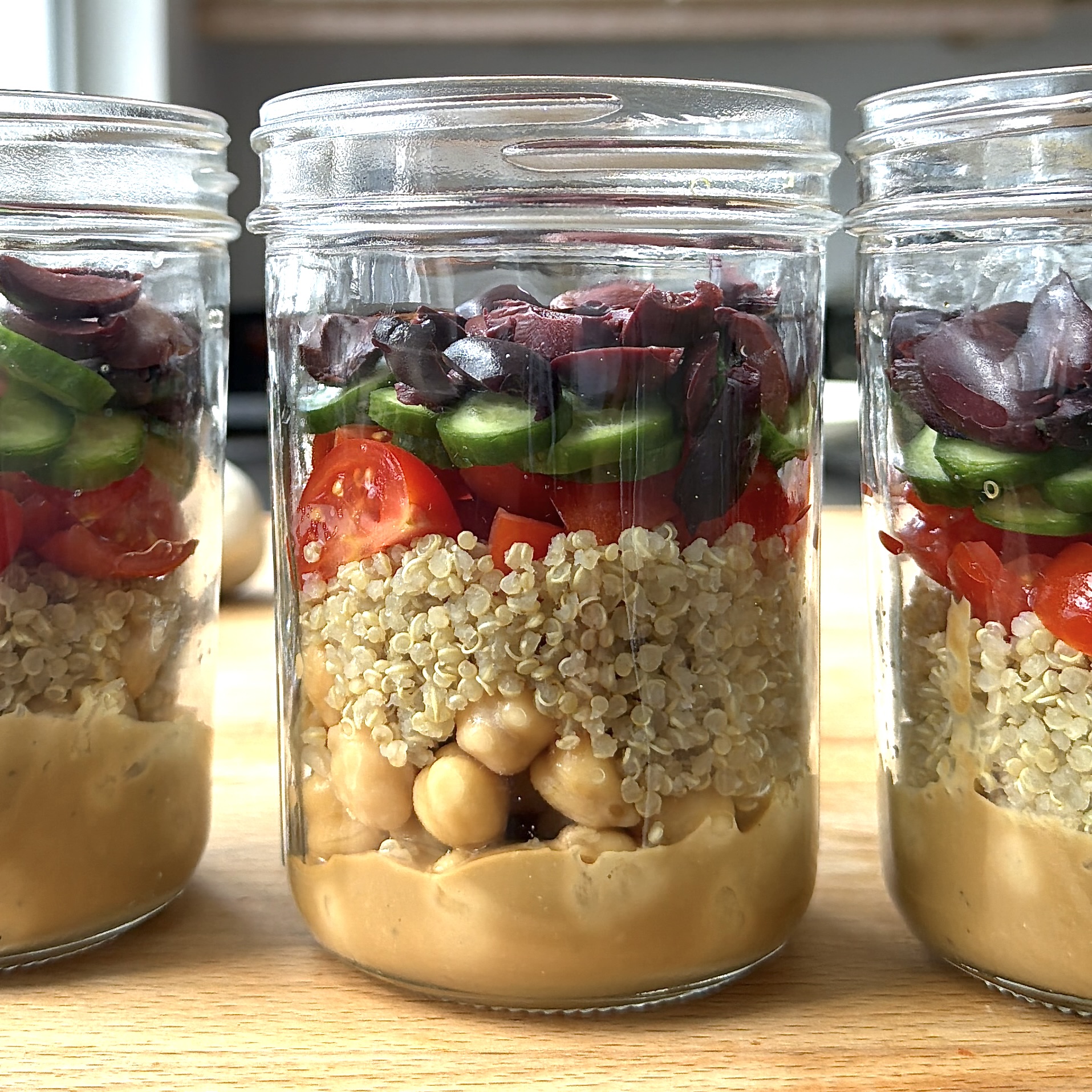
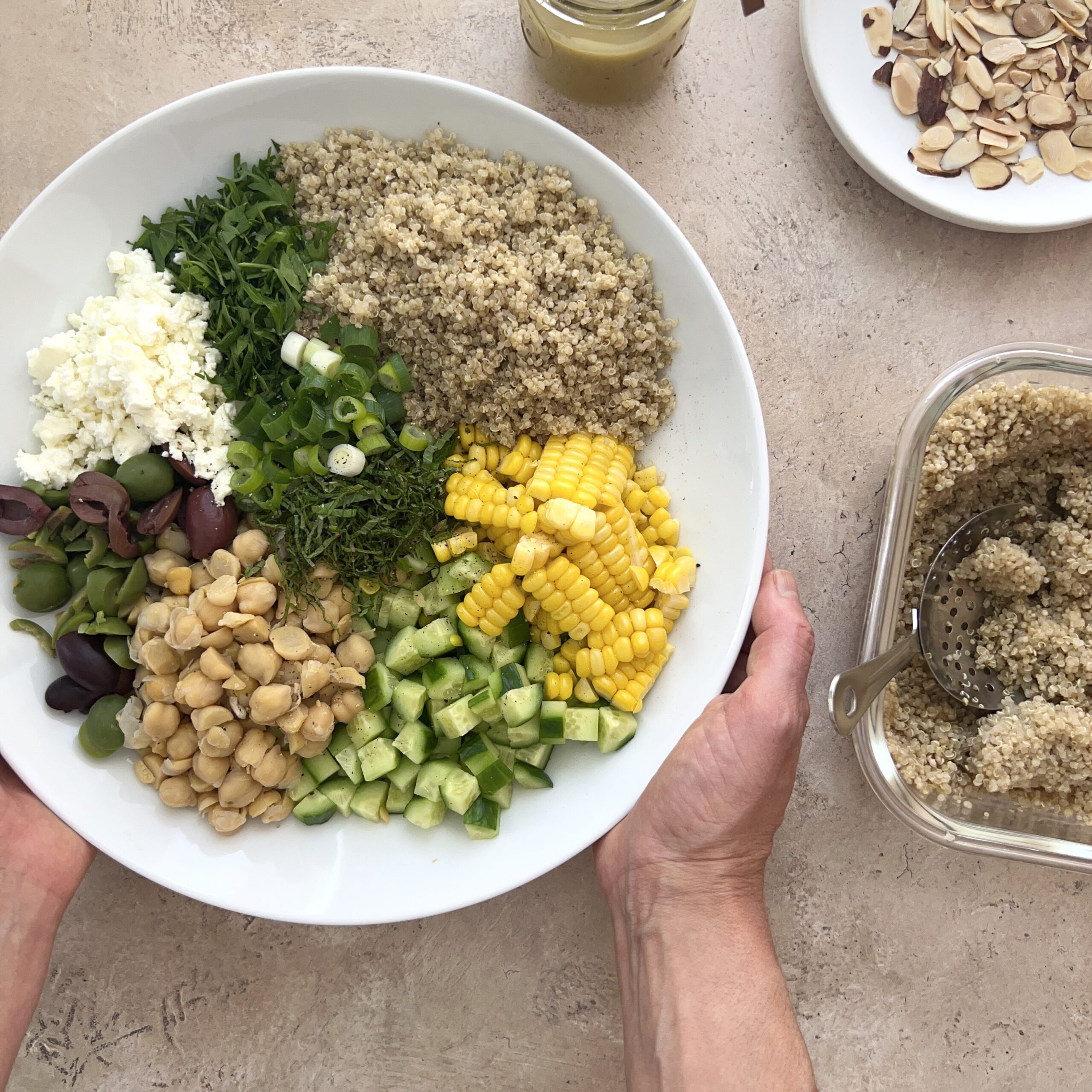
- Mediterranean Quinoa and Chickpea Salad with Balsamic Vinaigrette
- Roasted Beet and Kale Salad with White Beans and Shaved Fennel
- Caprese Inspired Broccoli and While Bean Salad with Castelvetrano Olives
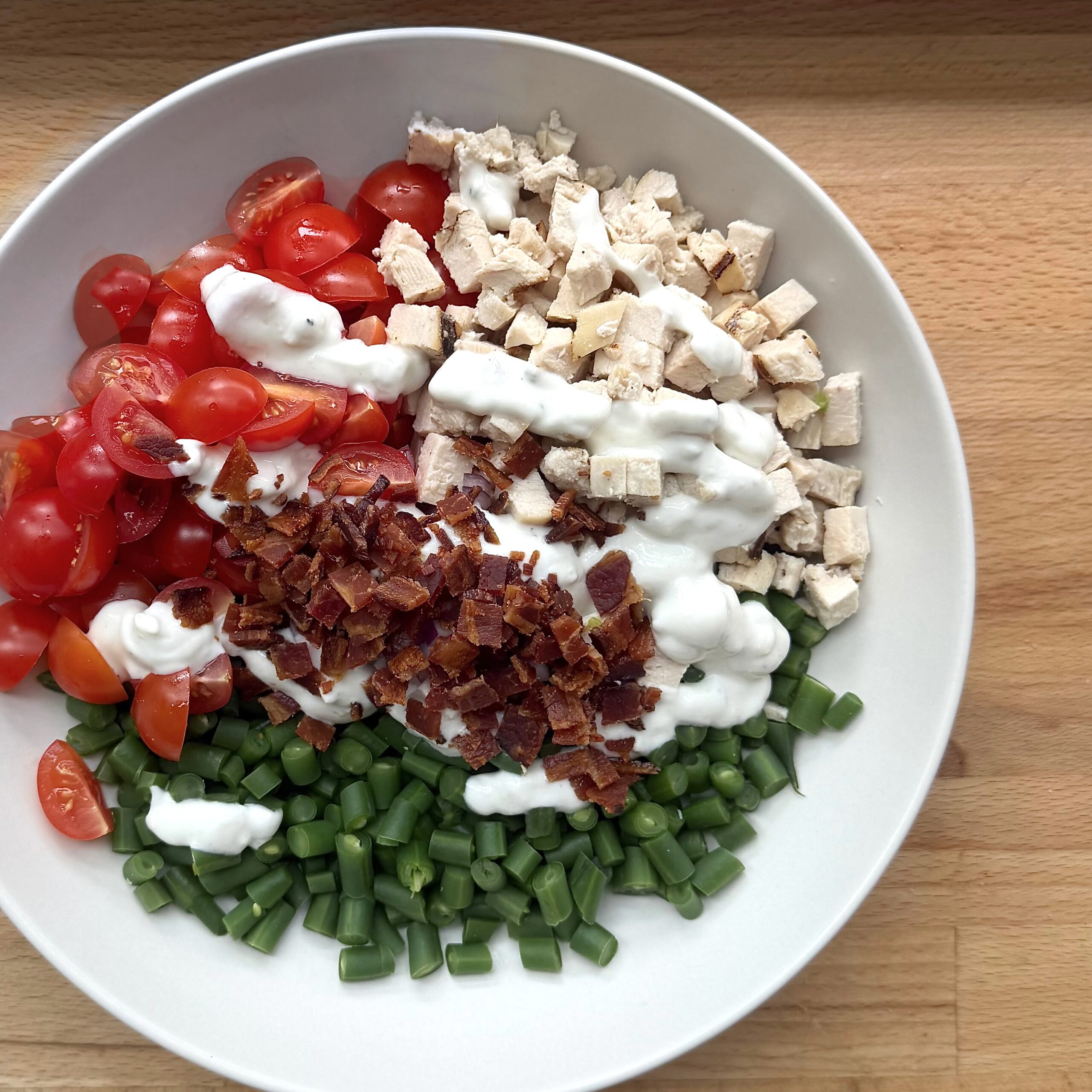
- Green Bean Tomato and Fresh Mozzarella Salad
- Balsamic Chicken Broccoli and Chickpea Salad
- Broccoli Tomato and Fresh Mozzarella Farro Salad with Balsamic Vinaigrette
- Grilled Zucchini Tomato and Chickpea Salad with Balsamic Vinaigrette
- Butternut Squash Broccoli and Barley Salad with Balsamic Vinaigrette
- Roasted Beet Broccoli and Quinoa Salad with Balsamic Vinaigrette
- Butternut Squash Kale and Farro Salad with Pine Nuts, Parmesan and Balsamic Vinaigrette
The Last Balsamic Vinaigrette Recipe You’ll Ever Need
Most people don’t realize that 5 ingredients and proper technique will crush a 20 ingredient “instagram salad dressing” every time.
Ingredients:
- LARGE BATCH/immersion blender method (makes appx. 2 cups)
1 large or 2 small garlic cloves, peeled
1 1/2 tbsp (30g) honey
1 tbsp (15g) Dijon mustard
4 oz. (120 ml) balsamic vinegar
8 oz. oil (240 ml) extra virgin olive oil
kosher salt
freshly ground black pepper
- SMALL BATCH/WHISK METHOD (makes appx. 2/3 cup or 4 servings)
2 tsp (10 ml) honey
2 tsp (10 ml) Dijon mustard
3 tbsp (45 ml) balsamic vinegar
6 tbsp (45 ml) extra virgin olive oil
1 garlic clove, minced or grated (optional)
kosher salt
black pepper
Directions
- LARGE BATCH DIRECTIONS (immersion blender method)
- Using an immersion blender and carafe/large mason jar (you could also use a top-loading blender, but it’s not my preference because of the reasoning I explain in the Can I Blend Extra Virgin Olive Oil? heading above), blend together the garlic, honey, Dijon mustard and balsamic vinegar until homogenous. While blending, drizzle in the oil in a slow steady stream. Stir in the kosher salt and pepper to taste. The dressing will keep, refrigerated, for up to 4 to 5 days.
- SMALL BATCH DIRECTIONS (whisk method)
- Whisk together the honey, Dijon mustard, and balsamic vinegar until combined. While whisking, slowly drizzle in the oil to emulsify it into the dressing. It’s okay to put the bottle down from time to time, as you want to make sure that all the olive oil you’ve added is integrated into the dressing before adding more. Add the garlic clove, if using. Season to taste with kosher salt and black pepper.
Equipment
 Braun Immersion BlenderBuy Now!
Notes
- Some of the links I share are affiliate links and when used to make a purchase I may earn a small commission. I link to these products because of their quality and how they aid in the successful completion of my recipes- not because of any commission I receive from your purchase. I am not affiliated with any corporations outside of my own sole proprietorship and any product reviews I share are solely based on my own opinions.
Did you make this recipe?
Tag @thesaladwhisperer on Instagram and hashtag it with
WANT MORE EASY RESTAURANT QUALITY SALAD DRESSING RECIPES?

Sarah Faris: The salad Whisperer
Sarah is a classically trained chef and Mom whose passion is spreading the gospel of salad. A native New Yorker, she now calls Miami, FL home.
Read more
Share this post:
Leave a Reply