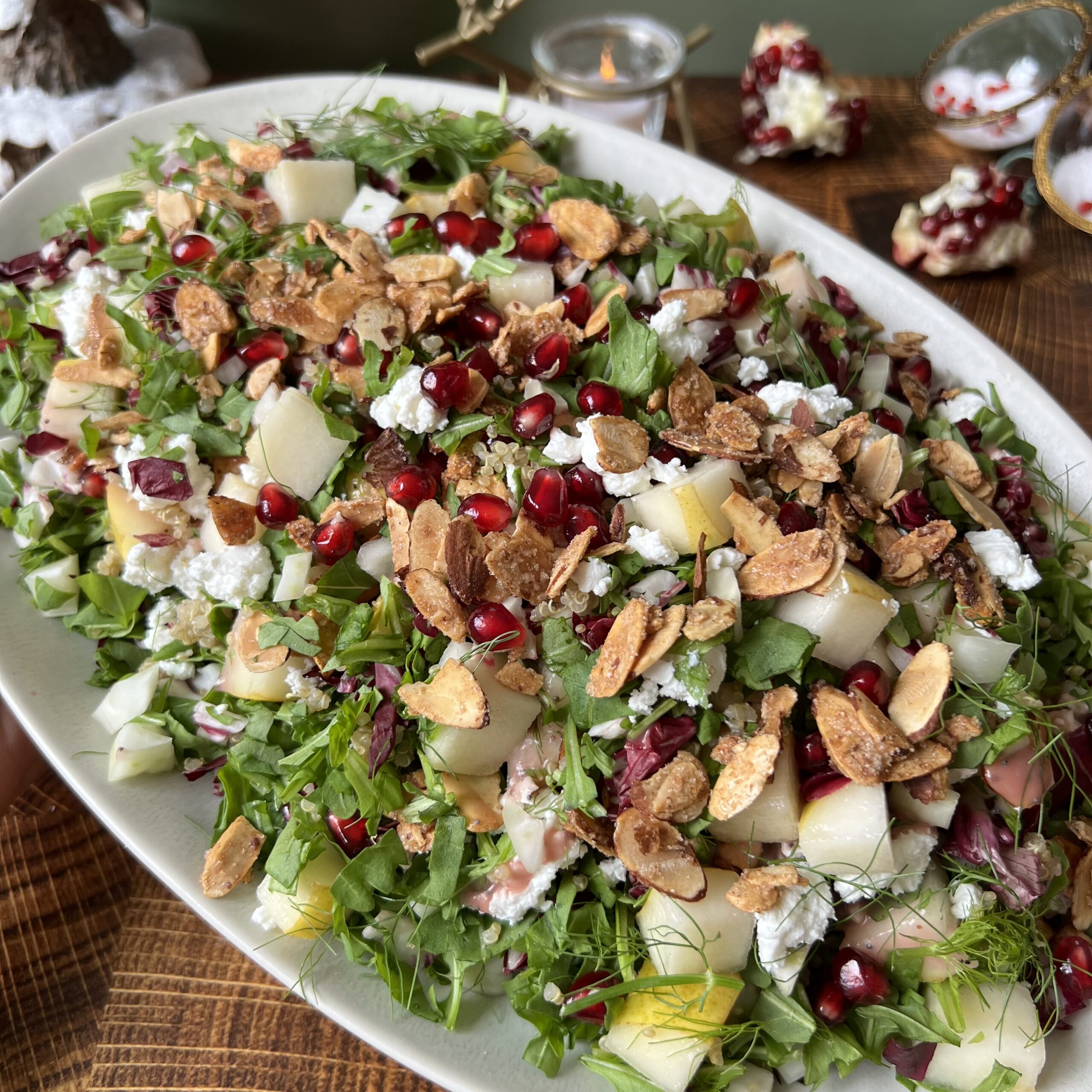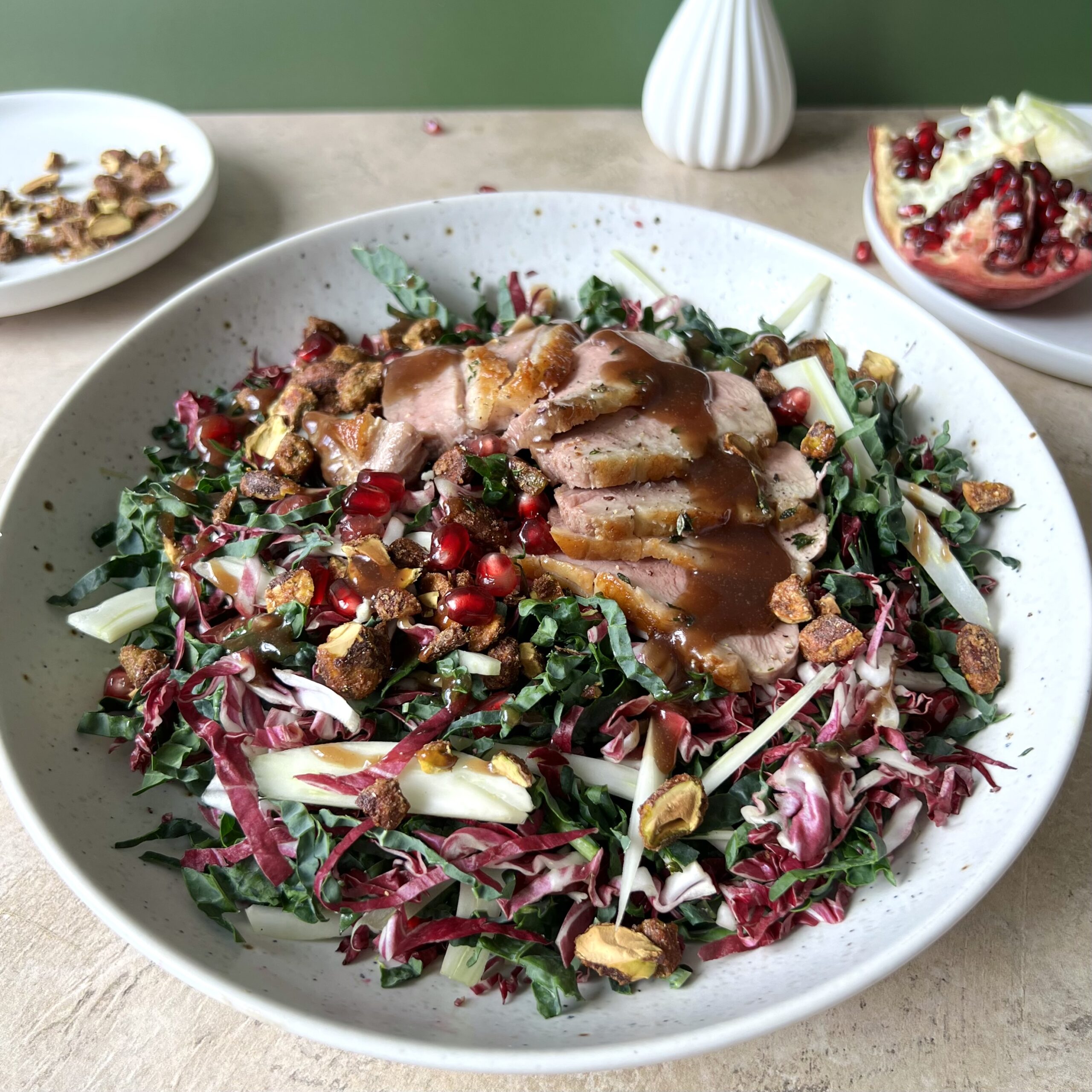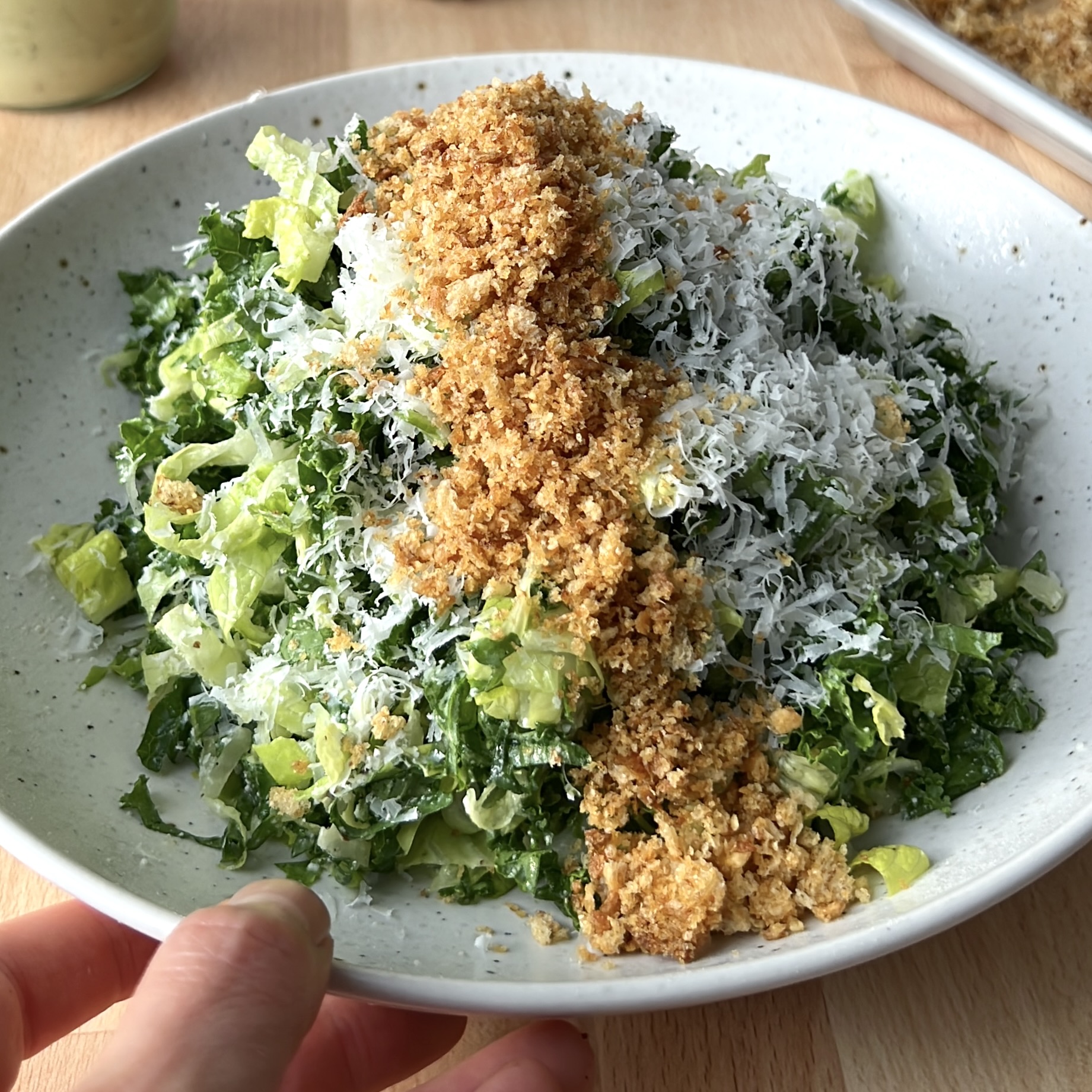


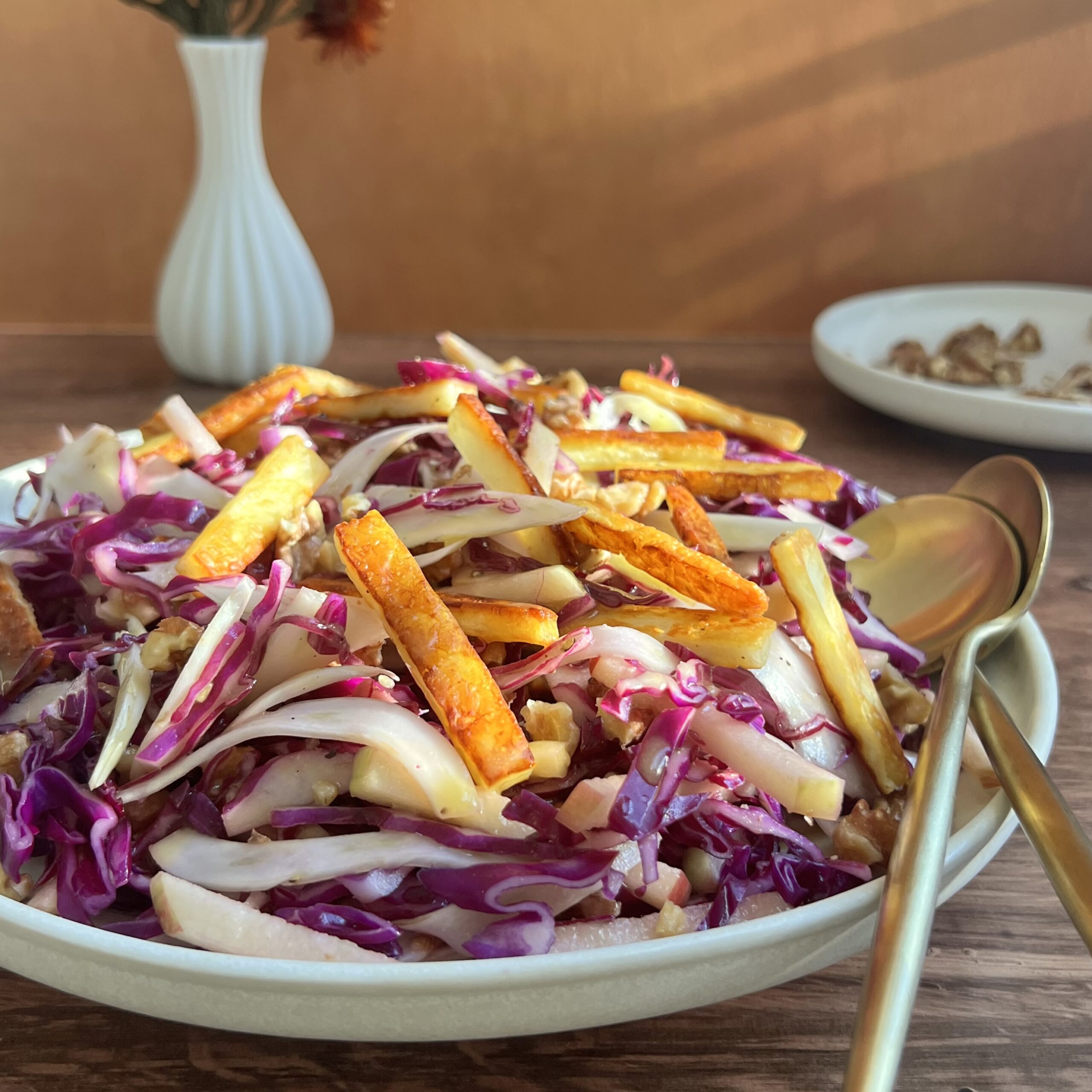


It’s time to stop massaging your kale! You deserve better than a slimy pile of something that would be more at home hanging off a Ninja Turtle. Massaged kale turns soggy, slimy and has the mouthfeel of seaweed. Don’t get me wrong, I love a seaweed salad when I am eating sushi, but otherwise no thanks. “But Sarah!”, you say. “Kale is so hard to chew! It overworks my masseters!” I got you. Today is the day you learn how to ribbon your kale.
Learning How to Ribbon Kale will Change How You View Kale Salads!
Slicing kale into ribbons makes it tender and easy to eat. This technique shortens the fibers so it eats soft, and doesn’t feel combative in your mouth (or require more frequent visits to your nurse injector).
Step by Step Directions for How to Ribbon Kale:
- De-stem the kale.
Hold the stem with one hand and strip the leaves off using your knife or your hand. Discard or compost the stems (or save for stock). - Stack and layer the leaves.
Lay 3-5 leaves flat on top of each other, lining them up so the edges match. Don’t overcrowd. - Roll into a tight bundle.
Starting from one long side, roll the stacked leaves into a snug cigar shape. The tighter the roll, the finer your ribbons. - Anchor with your non-knife hand.
Place your non-knife hand flat on top of the roll and gently press down to keep everything compact and steady. Tuck your fingertips slightly inward for safety. - Slice very close together.
Using a sharp chef’s knife, make thin crosswise cuts, keeping your slices extremely close (about ⅛ inch apart or thinner). The closer the cuts, the more delicate the ribbons. - Fluff and separate.
Use your fingers to gently toss and separate the strands. You’ll have fine, tender ribbons that don’t need massaging. - Season and LIGHTLY TOSS (not massage) Sprinkle a pinch of kosher salt into kale and toss lightly into kale (like you would cabbage if you were making Cole slaw). Allow to sit for at least 10 minutes (this is when I assemble the rest of my salad ingredients). The kale will wilt and become more receptive to your perfect salad dressing.
Here are 10+ of my Favorite Kale Salad Recipes:
-

Crispy Duck Salad with Kale Fennel Candied Pistachios and Pomegranate Vinaigrette
-
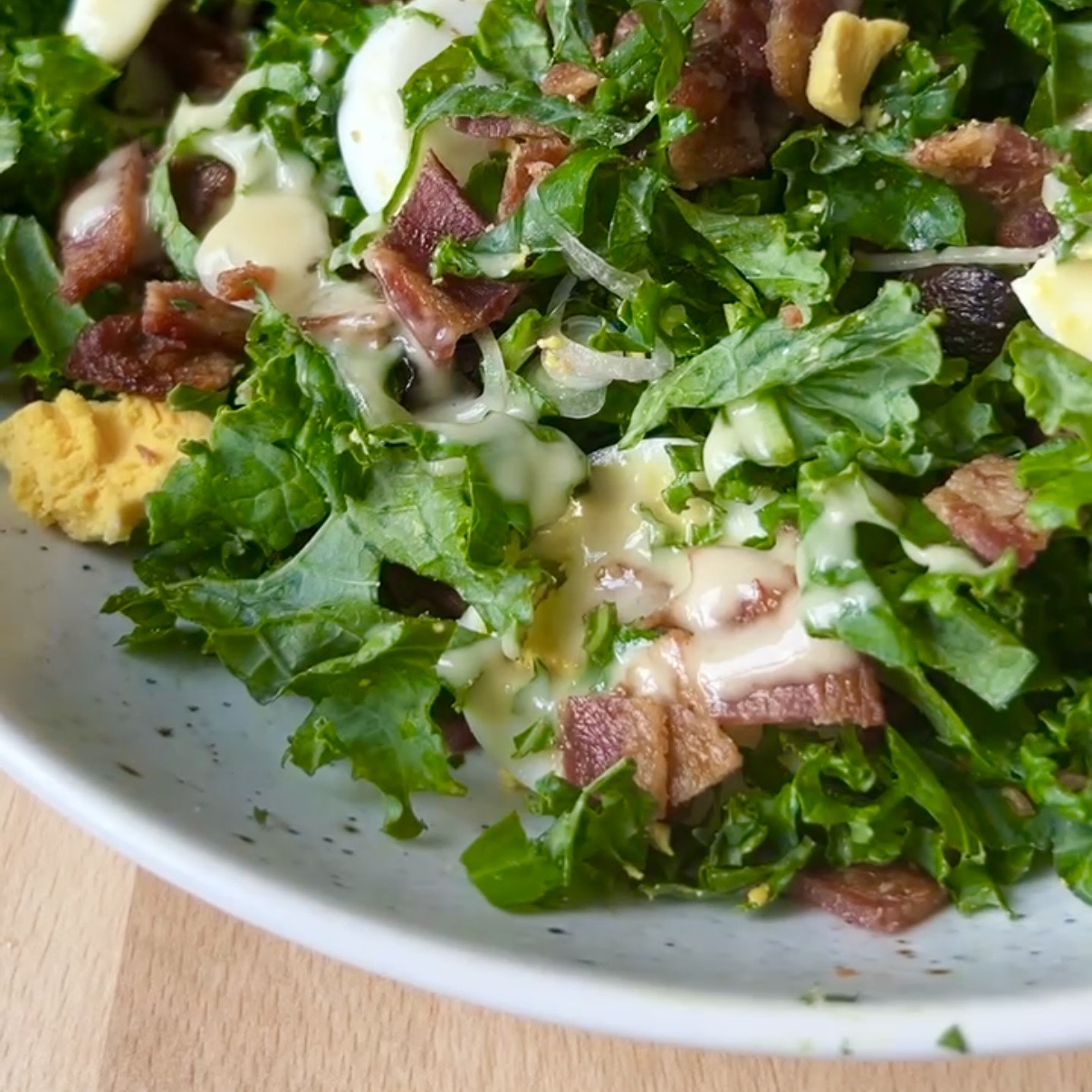
Kale and Roasted Mushroom Salad with Hardboiled Eggs and Bacon Vinaigrette
-
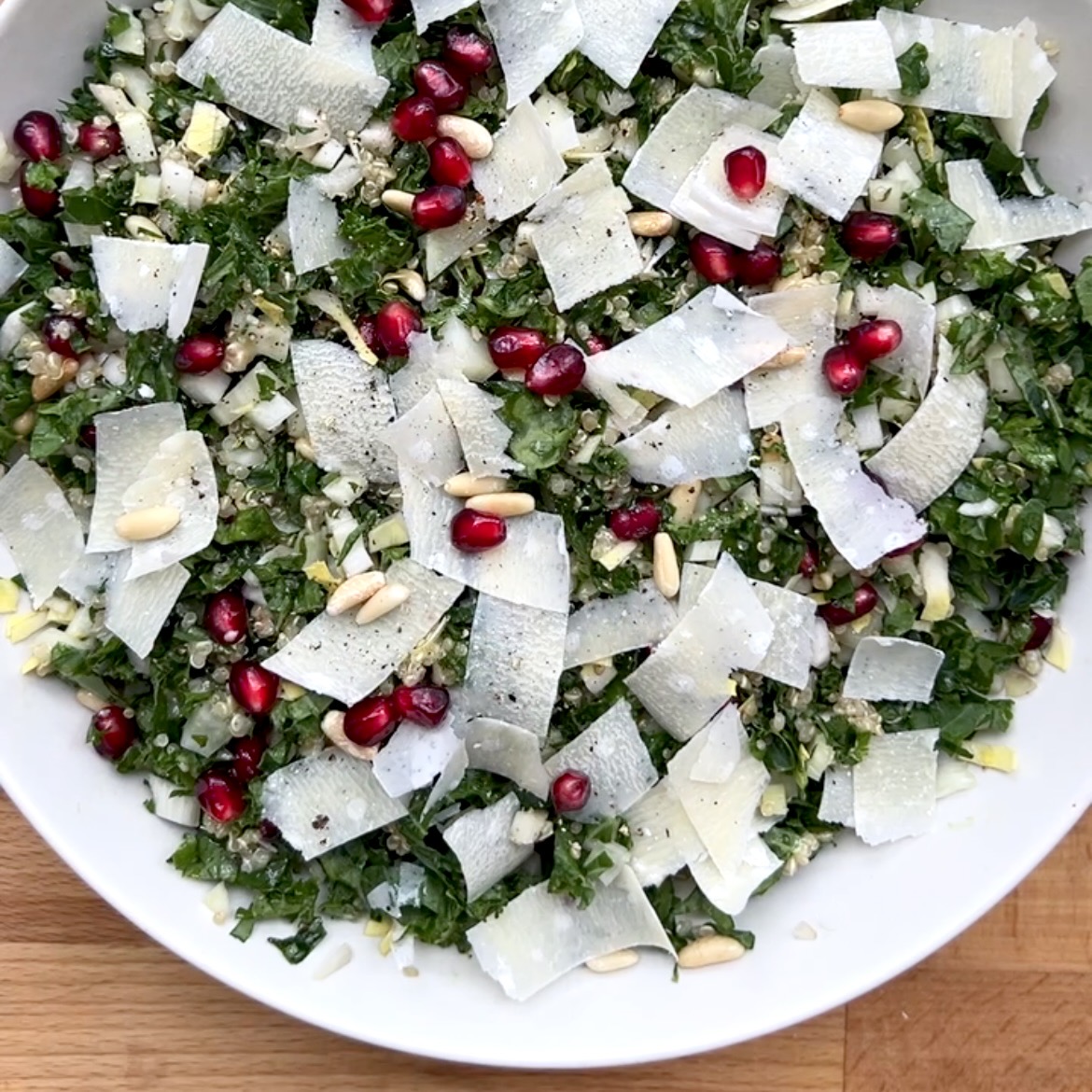
Kale Quinoa Salad with Pomegranate and Champagne Vinaigrette
-
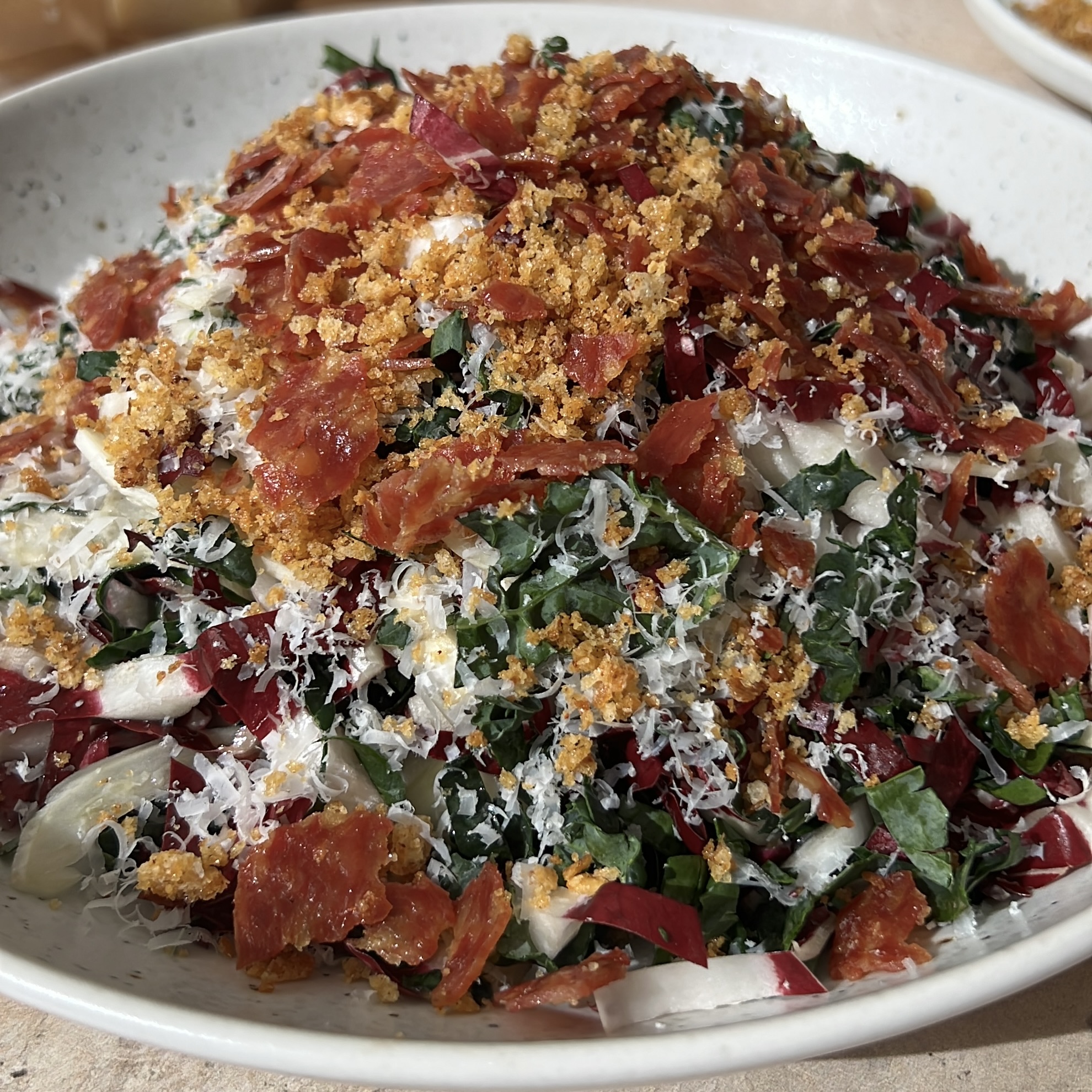
Kale Salad with Radicchio Endive and Crispy Soppressata (with White Balsamic Vinaigrette)
-
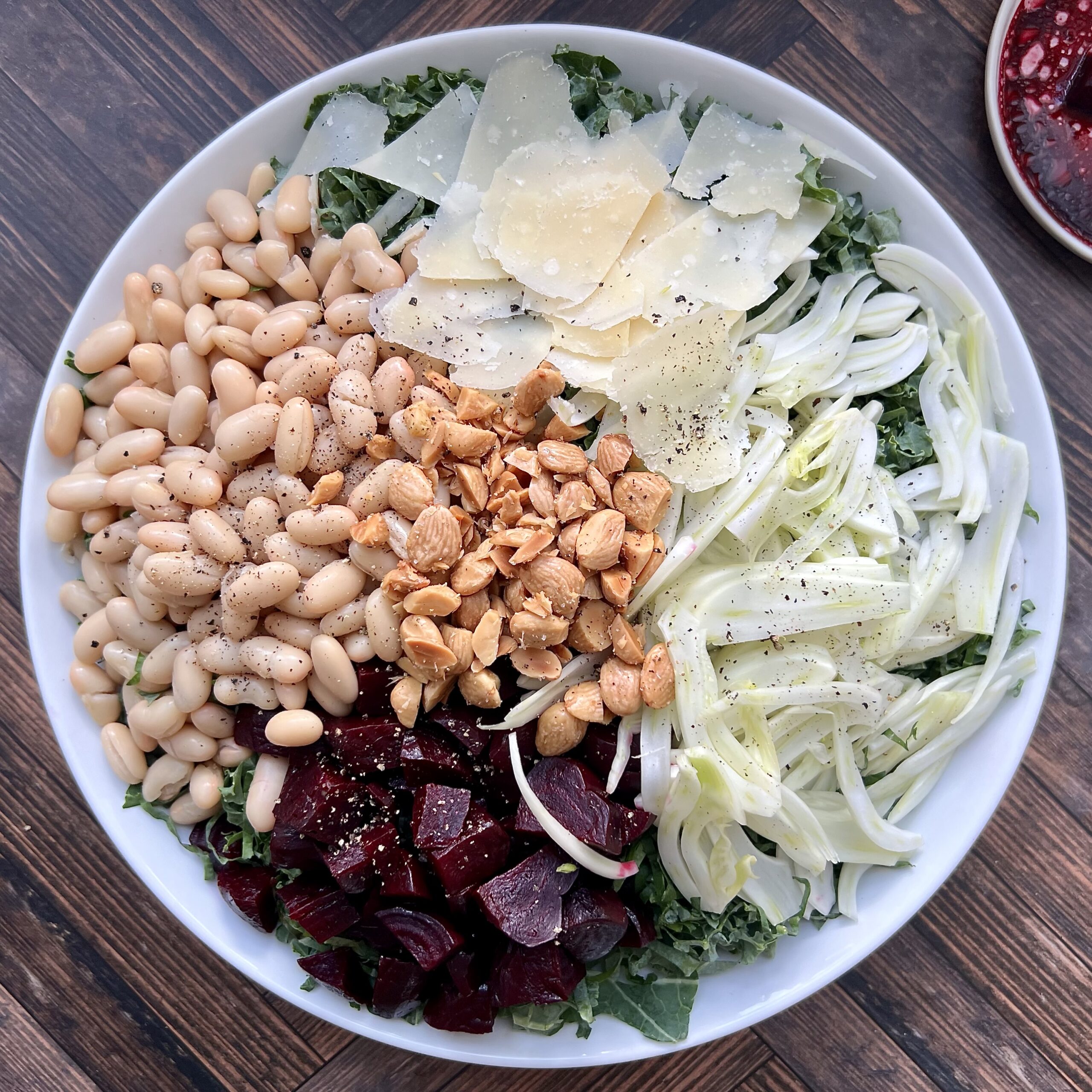
Roasted Beet and Kale Salad with White Beans & Shaved Fennel (with Balsamic Vinaigrette)
-
The Only Kale Caesar Salad Recipe You Need! (with my Legendary Eggless Caesar Dressing)

Sarah Faris: The salad Whisperer
Sarah is a classically trained chef and Mom whose passion is spreading the gospel of salad. A native New Yorker, she now calls Miami, FL home.
Read more
Share this post:
Leave a Reply